


The Philippines’ cultural history does not live in one realm. It can be built into a skyline, preserved in a piece of woven fabric, performed on a stage, written into a short story, or captured in an image of workers whose lives rarely make it into the national record.
The new set of awardees to Order of National Artists, spans architecture, dance, fashion design, film and broadcast arts, literature, music, theatre, and visual arts.

Some of them are being recognised posthumously while the others continue to actively create, teach, mentor, and preserve artistic practices for the generations coming after them. Together, their careers offer a portrait of Filipino creativity that reaches well beyond the most familiar names and disciplines.

Gabriel P. Formoso: Building Modern Manila
Long before architecture became inseparable from conversations about the shape and identity of modern Manila, Gabriel P. Formoso was helping define its physical landscape. His firm designed landmarks including the Asian Institute of Management building, Lepanto Building, Central Bank of the Philippines complex, and Valley Golf Club.

Formoso mentored the next generation of architects and championed an approach to design grounded in outlook that helped shape generations of Filipino architectural practice.
Nonoy Froilan: Giving Filipino Dance a Leading Man
The former Ballet Philippines principal dancer became one of the country’s most prominent male ballet performers, with major works choreographed specifically for him. His career helped raise the technical standard for male dancers in the Philippines while placing Filipino performers alongside local and international ballerinas.

Froilan later taught classical ballet, conducted master classes and workshops, choreographed, and documented regional performances, helping pass the discipline and heritage of dance to younger generations.
Patis Tesoro and Philippines’ Fashion’s Cultural Preservation
Few names are as closely associated with the preservation of Filipino textiles as Patis Tesoro. Her work has centred on reviving indigenous Philippine fabrics, particularly piña, while bringing traditional garments such as the baro’t saya and Barong Tagalog into contemporary fashion through updated silhouettes, embroidery, beading, and tailoring.

Her contribution extends into the communities behind those materials. Through the Katutubong Filipino Foundation, workshops, and her atelier in San Pablo, Laguna, Tesoro has supported local weavers and artisans while teaching younger designers the value of traditional craftsmanship and slower production.
Armando “Bing” Lao on Finding Stories in Real Life
For independent Philippine cinema, Armando “Bing” Lao leaves behind an influence that can be felt in the filmmakers who learned from him. Recognised posthumously, the screenwriter and educator developed the “Found Story” methodology, encouraging filmmakers to build narratives from real environments and observed life rather than forcing reality into predetermined plots.

His screenwriting credits included Kinatay and Takaw Tukso, while his screenplay supervision contributed to Kubrador. More than 40 batches of aspiring artists passed through his Found Story Screenwriting Workshop, making his legacy inseparable from the filmmakers he helped shape.
Gregorio Brillantes: The Filipino Short Story as a Mirror
The late Gregorio C. Brillantes is recognised for a body of fiction and essays that moved fluidly between faith, science fiction, politics, and the everyday realities of the Philippine middle class.

His collection The Distance to Andromeda and Other Stories remains among his best-known works. Beyond fiction, Brillantes also worked as an editor and journalist, influencing generations of writers and helping shape modern Philippine English literature.
His stories found philosophy in ordinary anxieties while remaining attentive to the political conditions surrounding them.
Nicanor Tiongson: Keeping Cultural Memory in Conversation
Nicanor G. Tiongson has spent decades examining how Filipino culture remembers itself. A scholar, critic, playwright, and former artistic director of the Cultural Center of the Philippines, Tiongson has researched traditional theatrical forms including the komedya and sinakulo, bringing them into conversation with contemporary audiences.

As a professor emeritus at the University of the Philippines Diliman and a founding member of the Manunuri ng Pelikulang Pilipino, his career has connected cultural research, criticism, theatre, and education.
Alfredo S. Buenaventura: Filipino Stories in Classical Form
Composer, conductor, and educator Alfredo S. Buenaventura spent his career proving that Filipino stories could find a home within classical music. His more than 50 major works include operas such as Maria Makiling and Diego Silang, alongside symphonies and cantatas. Philippine epics, legends, folk themes, and indigenous instruments frequently became part of his musical vocabulary, placed within romantic and contemporary forms.

As an educator and former dean of the Centro Escolar University Conservatory of Music, Buenaventura also worked to ensure that original Filipino compositions remained part of musical education and performance.
Teodoro L. Hilado: The Art Behind the Curtain
Theatre is built from more than the performers audiences see. Teodoro L. Hilado, recognised posthumously, helped establish professional standards for lighting design and stage management in the Philippines during his long tenure as technical director of the Cultural Center of the Philippines.

At a time when stage lighting could be treated as a supporting element, Hilado helped establish it as part of the storytelling itself—shaping atmosphere, mood, and visual rhythm. He also trained generations of technical directors and lighting designers, leaving behind a professional foundation that continues to support Philippine theatre.
Imelda Cajipe Endaya: Art as Resistance and Record
A painter, printmaker, and installation artist, Imelda Cajipe Endaya is recognised as the first female National Artist for Visual Arts. Her practice has examined women’s rights, the Filipino diaspora, colonial mentality, and the export of female labour, often incorporating materials such as sawali, papier-mâché, and found household objects.

She also co-founded Kasibulan, a collective that created space for women artists within a male-dominated art scene, and initiated Pananaw: Philippine Journal of Visual Arts.
Nunelucio M. Alvarado: Putting the Provinces on the Canvas
A leading figure in Philippine social realism, Nunelucio M. Alvarado’s angular paintings have focused on the lives of sugar workers, or sacadas, capturing the physical hardship and resilience embedded in agricultural labour.
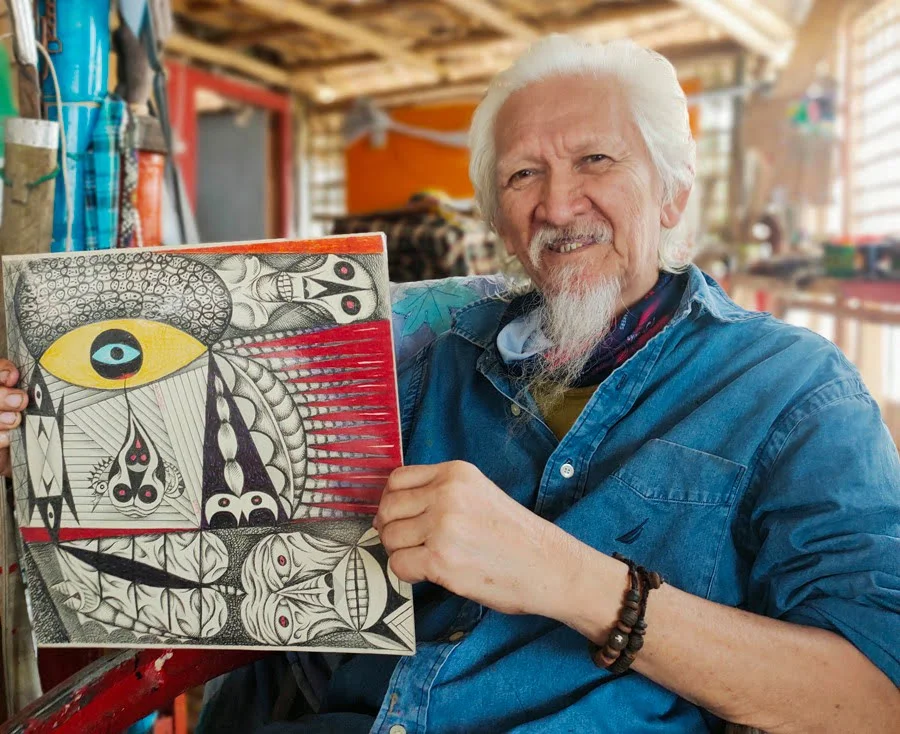
His founding of the Pintor Kulapol group furthered a community-based approach to art, encouraging regional artists to draw from their own social and economic realities. His work has consequently made the provinces themselves an important part of the contemporary Philippine art conversation.
Taken together, the 10 new National Artists make the idea of “Filipino culture” feel much larger than a fixed collection of canonical works. It exists in Formoso’s buildings and Froilan’s movements. In Tesoro’s textiles, Lao’s found stories, Brillantes’ fiction, and Tiongson’s scholarship. It lives in Buenaventura’s compositions, Hilado’s lighting, Cajipe Endaya’s politically charged materials, and Alvarado’s portraits of working-class life.
Their recognition also points to something important about cultural legacy: it is built not only by the works that become famous, but by the practices that artists spend decades teaching, documenting, protecting, and passing on. The newest National Artists give the country another chapter to an archive that is still being written.


