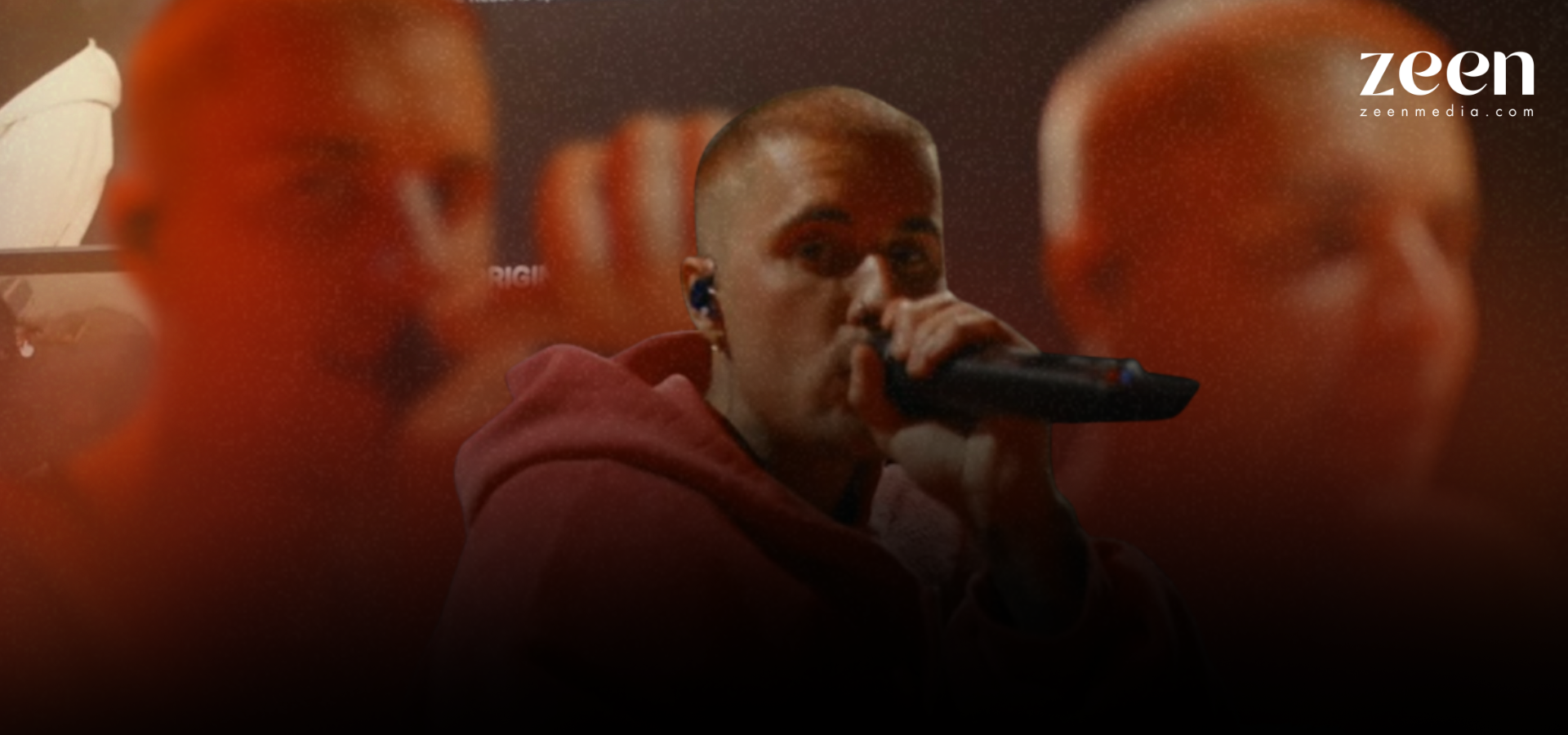
Justin Bieber’s Coachella 2026 Weekend 1 headlining set reworked what a festival main stage could look like, leaning into minimal production, internet absurdity, and career-spanning nostalgia. Instead of a tightly polished spectacle, Justin Bieber delivered something looser and more self-aware, where memes, memories, and music all collided in real time. The result felt less like a traditional concert and more like watching his entire public life replayed, remixed, and sometimes mocked on a giant screen.
Minimalist stage, maximal attention
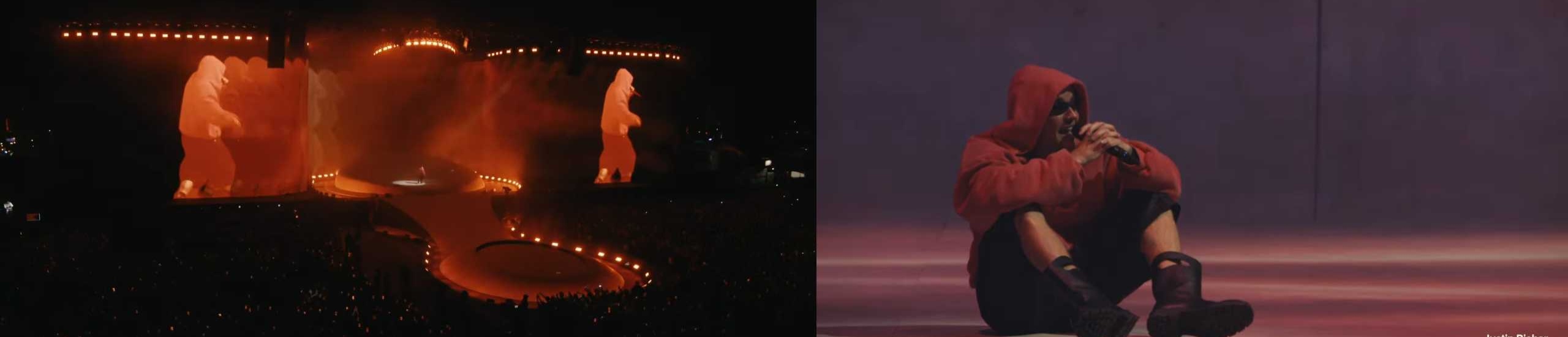
Justin Bieber opened with a stripped-down setup that placed him on a bare stage in a hoodie-and-shorts look, stripping away typical headliner spectacle. With no elaborate staging to distract, the focus stayed on his voice and presence, giving the set a raw, almost unfiltered energy that framed simplicity as a statement rather than a limitation.

The laptop set
Midway through the show, Bieber shifted into the night’s most viral moment: the laptop segment. Sitting at a desk with his screen projected across the festival visuals, he turned Coachella into a live internet scroll. He pulled up early YouTube clips, fan-favorite throwbacks, and full-on “brainrot” meme culture, including viral Vine-era chaos like “Deez Nuts,” “Double Rainbow,” and compilations of his own most awkward public moments.
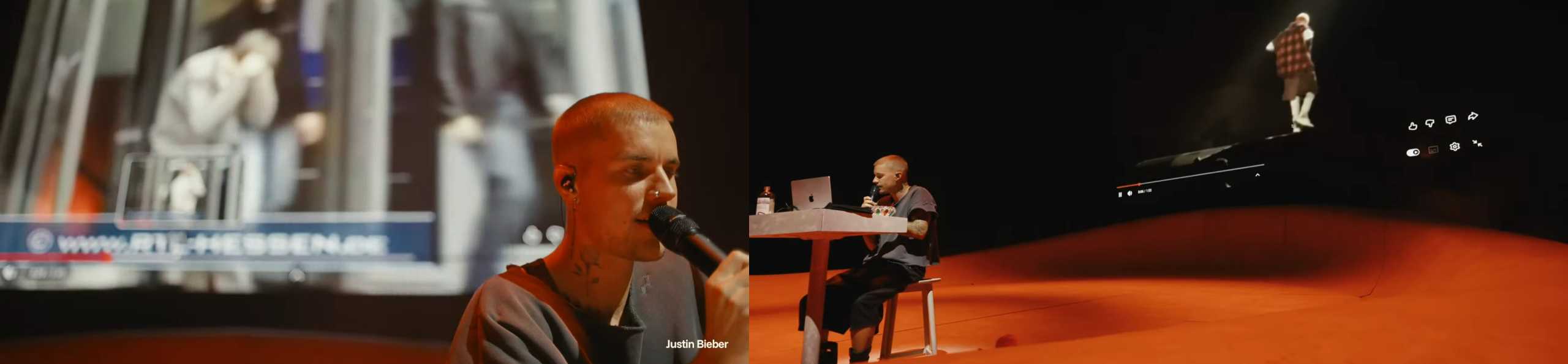
He didn’t avoid his past either. Bieber revisited his revolving door clip, stage mishaps, and even his viral “standing on business” paparazzi moment, reframing it in real time with a self-aware edge. What could have been embarrassment became shared humor, turning personal internet history into a collective joke with the crowd.
Duet with his younger self and fan-favorite throwbacks
The set’s emotional core came when Bieber transitioned from memes into music, performing alongside his younger self on screen. Archival videos played as he sang live over them, creating layered versions of his earliest eras.
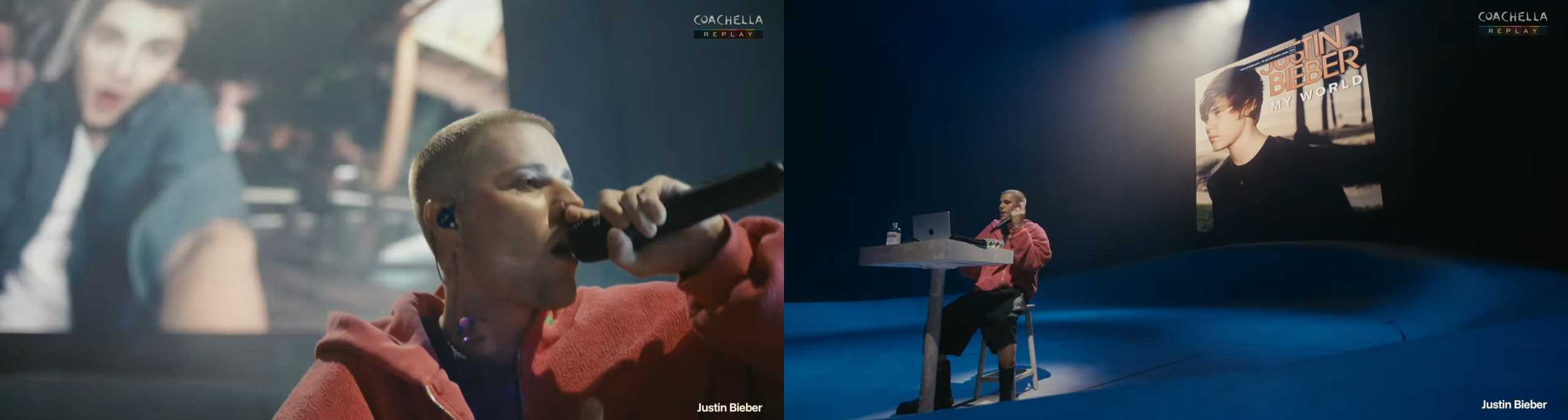
The most fan-favorite moments came from his early breakout catalog and YouTube-era covers, including “Baby,” “Beauty and the Beat,” and “Never Say Never,” alongside his viral discovery cover of “With You.” These songs, once defining teenage stardom, were reintroduced as shared nostalgia, with the crowd effectively becoming part of a call-and-response between past and present versions of Bieber.
Surprise guests across eras
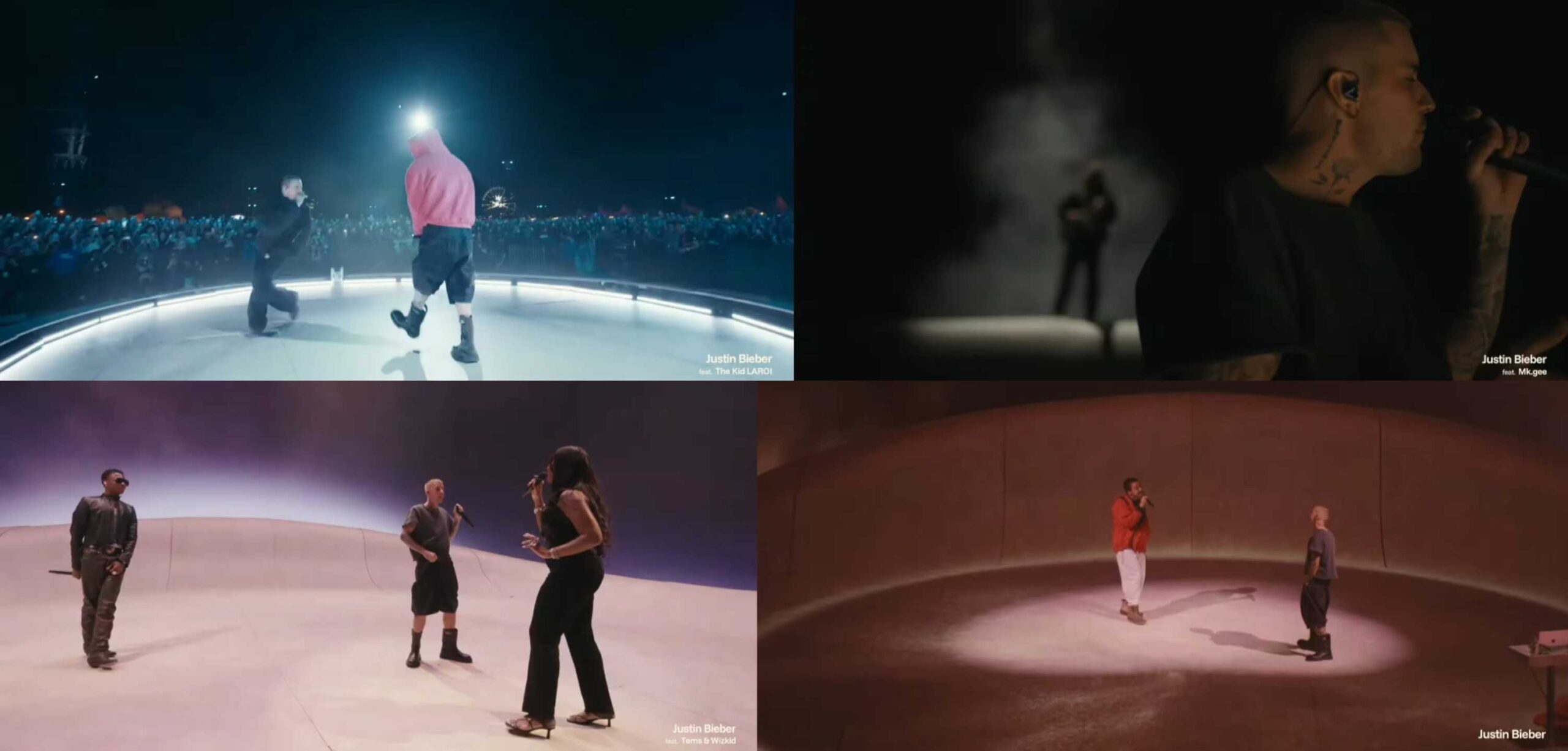
The collaborations added structure to the set’s emotional and sonic shifts. The Kid LAROI joined for “Stay,” reinforcing their mentor-mentee dynamic and the song’s stadium-level impact. Wizkid and Tems appeared for the “Essence” remix, highlighting Bieber’s Afrobeats crossover era and global reach. Dijon brought a more experimental R&B texture to the stage, while Mk.gee added live guitar work that pushed the set into a more organic, band-driven direction.
“Daisies” finale and fireworks ending
The performance closed with Bieber’s new track “Daisies,” which shifted the night from chaos into clarity. As the song built, the desert sky erupted in fireworks, turning the final moments into a cinematic release after an intentionally fragmented set. The visual tied together the night’s themes while signaling a more reflective, forward-facing era.
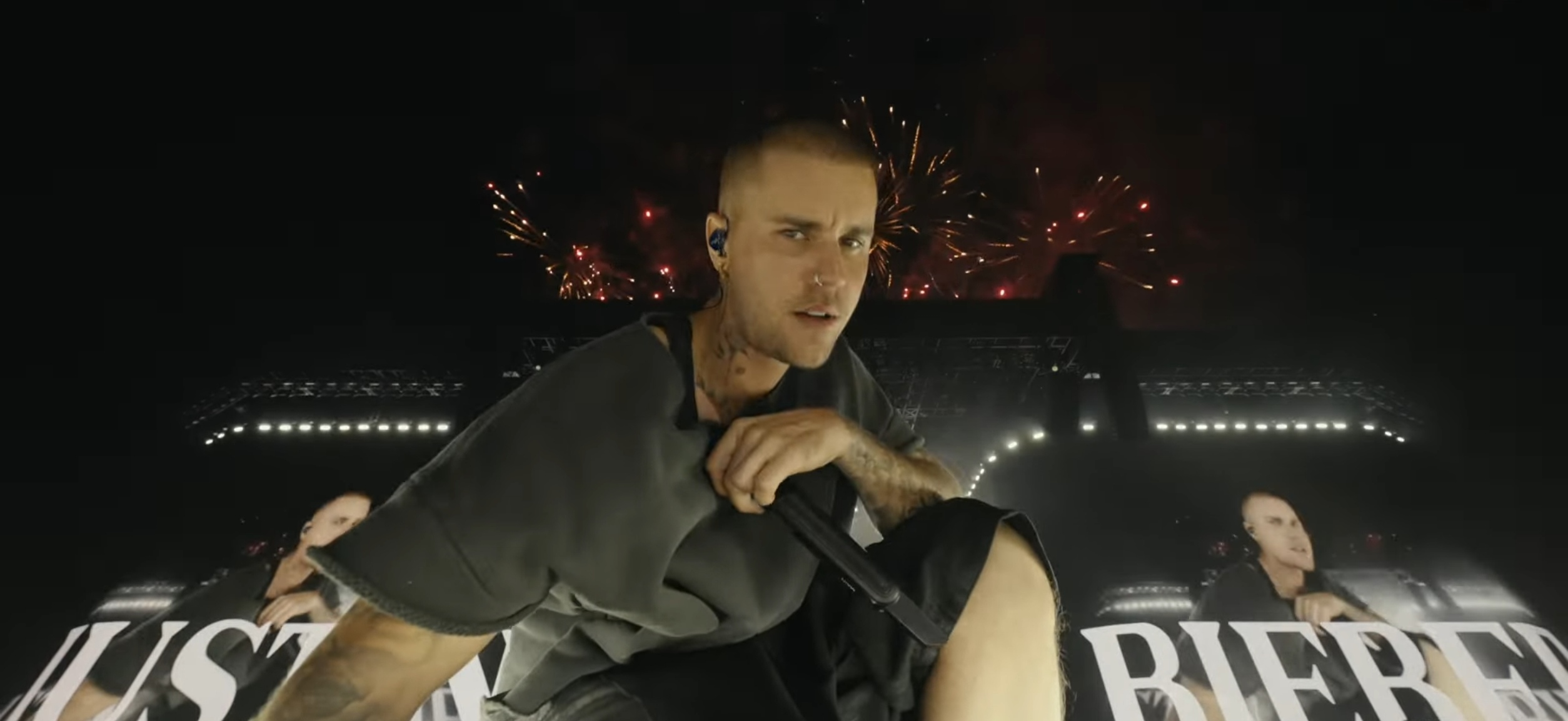
In the end, Bieber’s Coachella set worked as a living archive of his career filtered through internet culture. The brainrot meme segment, fan-favorite throwbacks, and younger-self duets all pointed to the same idea that his legacy is no longer something separate from online chaos, but something shaped by it.
By embracing both sincerity and absurdity on the same stage, he turned Coachella into a performance about memory itself, where nostalgia, virality, and identity blurred into one continuous feed.
PHOTO: COACHELLA (via YouTube)