

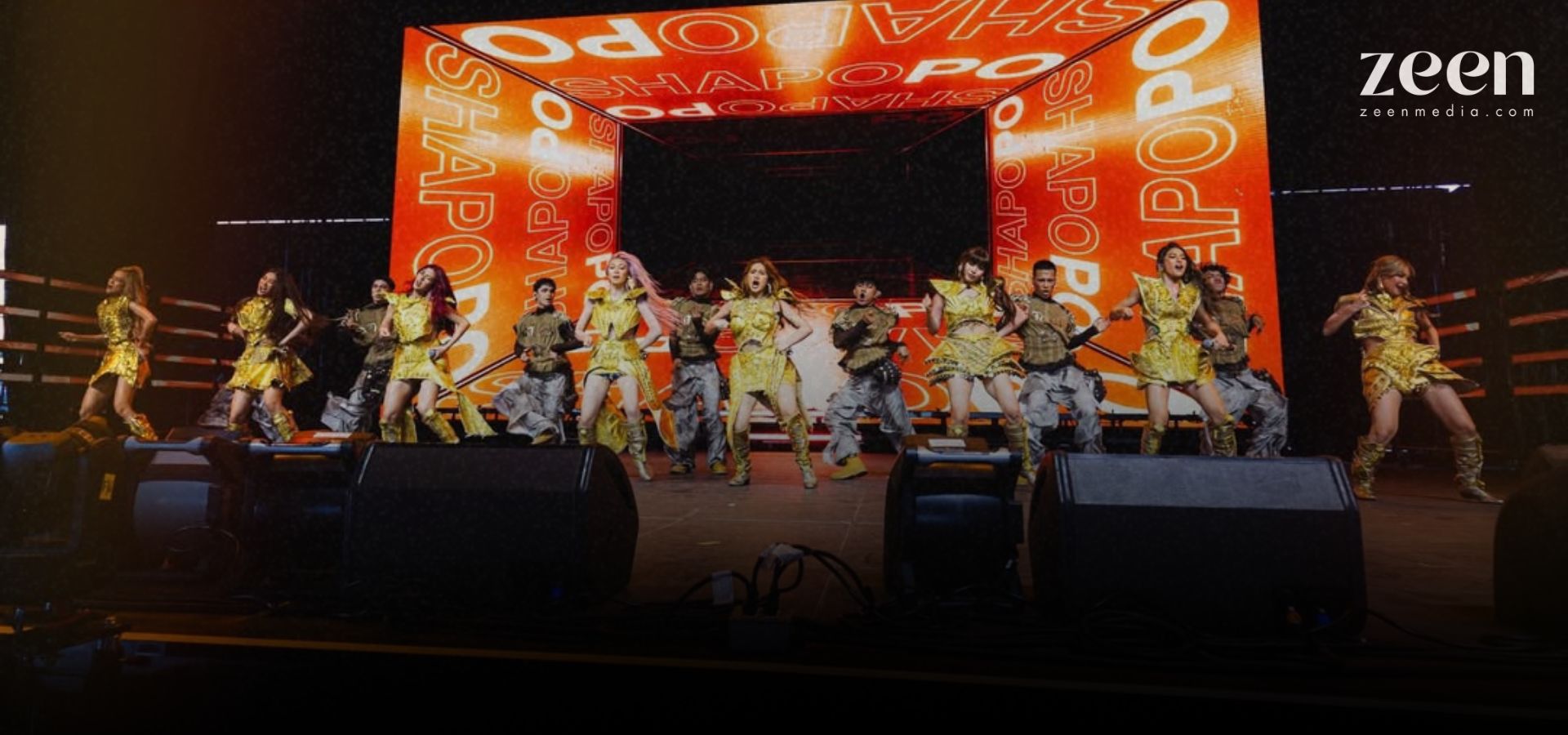
For BINI’s Coachella Week 1 appearance, the brief extended beyond visuals. The outfits had to support a one-count quick change, hold structure under movement, and translate Filipino references to a global stage.
The result came from a collaboration that treated the base as the starting system, with every layer built around it.
“It was almost like building an armor.” Designer Marian Zara approached the beige denim base with function as the priority.
“I was briefed that there would be a quick change on stage… how do I translate my designs, which are very structured, into a one-count reveal?” she says.
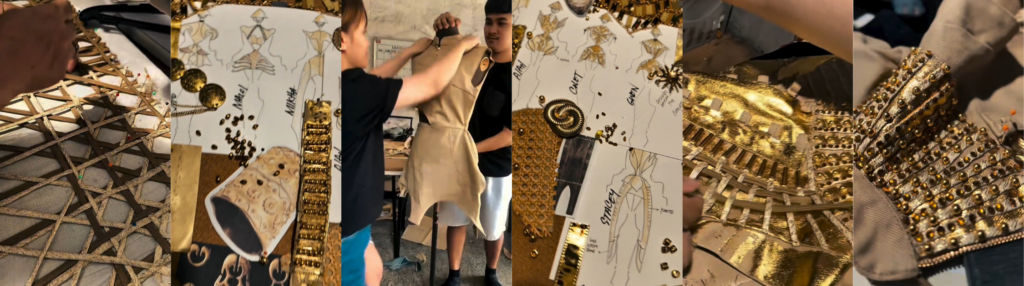
The base was designed to manage stress points at the shoulders and waist, carry additional weight from embellishments, and remain flexible during choreography. Placement of enclosures was mapped early to ensure the reveal could happen cleanly onstage.
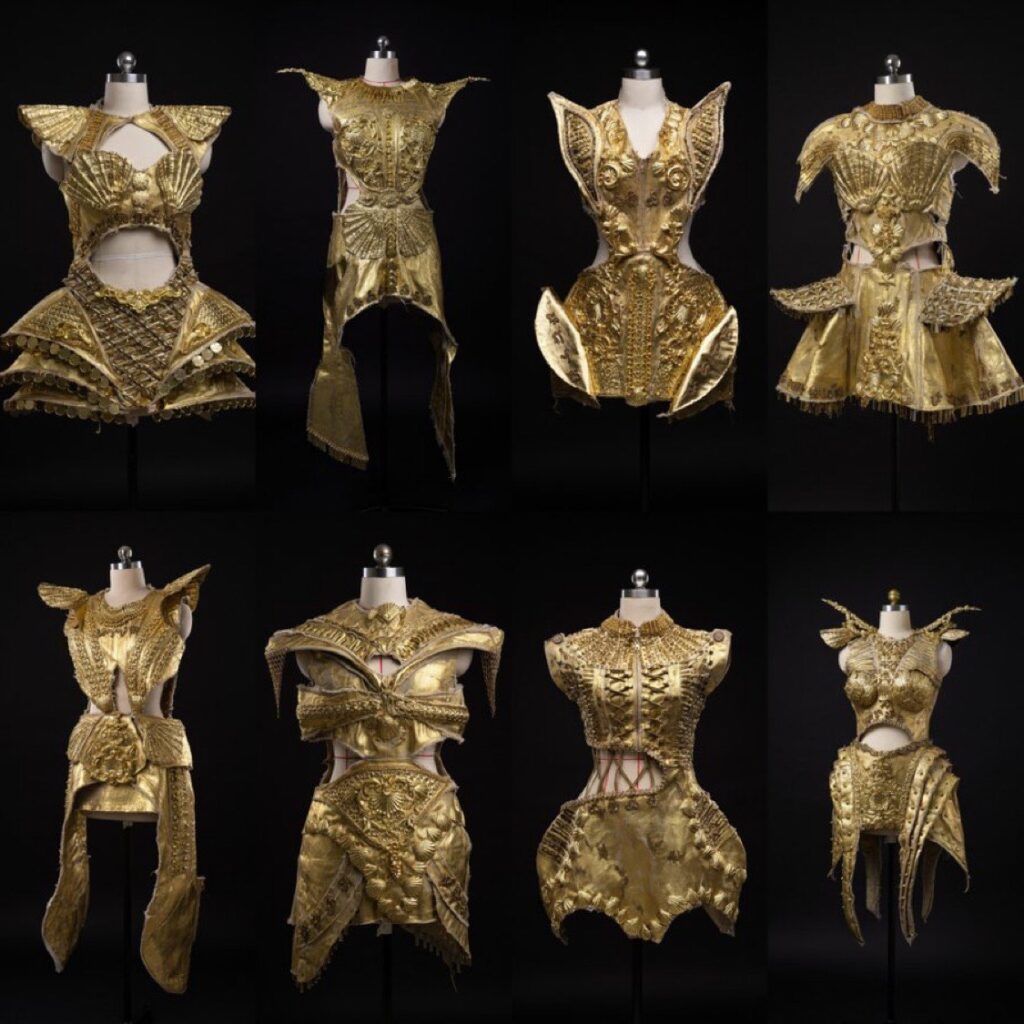
With the structure set, Job Dacon and his team developed the outer embellishments with reference to pre-colonial forms.
“When the pieces were sent to us, the main priority was to make it so as if it looks like a set of pre-colonial armor,” he explains.
Initial plans for larger calado filigree were adjusted to accommodate movement. “At first our team wanted a bigger calado filigree but had to pare it back for ease of movement,” he adds.
Transcending Heritage on Stage
Calado carvings and Bantayan scallops were adapted into smaller cast elements, preserving recognizable forms while ensuring they read clearly onstage.
Job’s team shifted from bronze powder to gold finishing during development. “We decided to go with gold as it sparkles on-stage,” he says, noting how lighting influenced the final material direction.
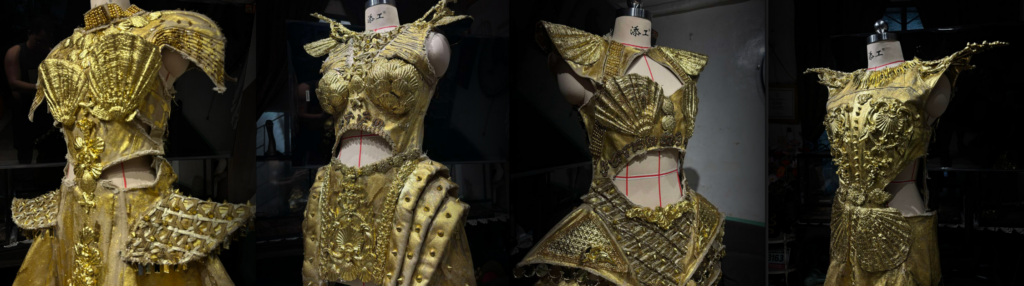
The embellishments combine recycled materials and traditional references. Job shares that their team used melted waste such as styrofoam, PVC, and rubber soles, materials they have worked with since the atelier’s early years.
At the same time, the use of gold leaf references pre-colonial Filipino adornment, where gold held cultural significance. “The best decision is to marry the things and processes we have now… to our ancestral roots,” he says.
Meticulous Makers: Moodboards to Masterpieces
Production required adjustments due to time constraints. Marian notes that some planned details were removed during the process.
“The hardest part was letting go of some of the more intricate details… but it made the final looks feel more refined and performance-driven,” she says.
For Job’s team, time was spent selecting and finalizing motifs. “The most time-consuming part is picking the perfect calado wood motif,” he adds.
Where Construction Meets Character
Both teams worked within a shared structure while maintaining distinct roles. Marian led the base construction, while Job’s team focused on embellishment and detailing.
Input from the members of BINI informed adjustments related to comfort and movement. “Since they’re the ones performing, their input really mattered—how the outfit feels, how it moves,” Marian explains.
Job adds that embellishments were aligned with each member’s stage presence, including BINI Gwen’s performance style.
The Architecture of the Aesthetic
Some elements were designed for close viewing. Marian highlights baybayin patches reading “Pilipina,” “Binibini,” and “Perlas ng Silangan,” placed within the outfits as embedded references.
Structural components, such as transparent enclosures, supported the quick-change mechanism and overall construction, though they remain largely unseen during performance.
Beyond the stage lights, the Coachella wardrobe lived in the details. Marian integrated intimate nods to Filipino identity through Baybayin patches—Pilipina, Binibini, and Perlas ng Silangan—nestled within the seams. While invisible structural elements and transparent enclosures powered the high-stakes quick changes, every layer served a dual purpose of surviving the desert’s performance demands while carrying the weight of cultural heritage.
PHOTOS from MARIANZARA (via Instagram) and JOB_DACON (via X)


