
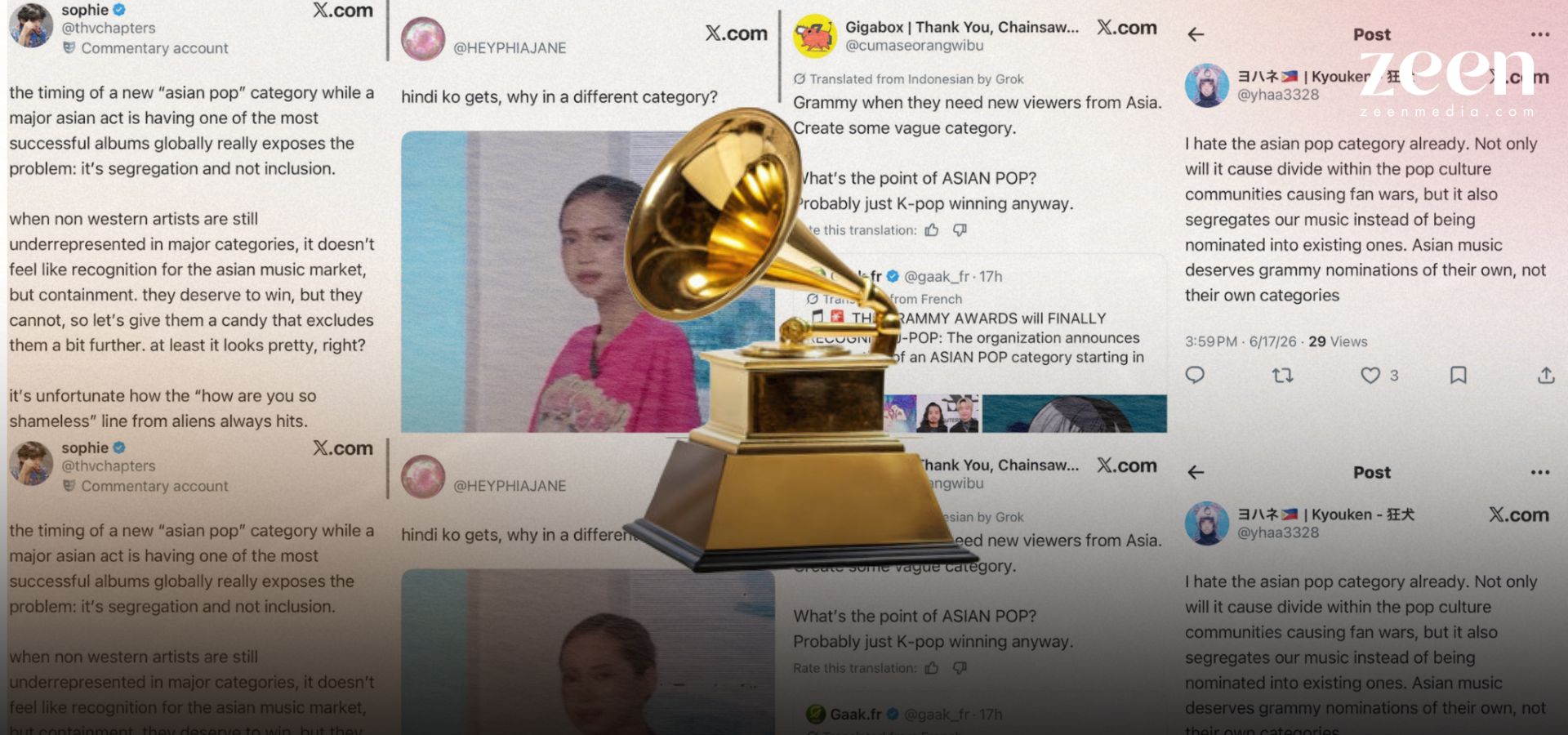
The Recording Academy is introducing its first category dedicated to Asian pop music—but not everyone is celebrating the move.
Ahead of the 2027 GRAMMY Awards, the organization announced five new categories, including Best Asian Pop Music Performance, alongside Best Traditional Pop Vocal Performance, Best Traditional Folk Album, Best R&B Collaboration, and Best Latin Song. The new Asian pop category will recognize recordings from Asian markets, including K-pop, J-pop, C-pop, and other Asian-language pop releases.
The announcement was largely welcomed as a long-overdue acknowledgment of Asian music’s global influence. However, a different question quickly emerged online: Is this recognition—or segregation?
The phrase gained traction among fans who argued that grouping multiple industries under a single category risks treating Asia as a monolith. Critics pointed out that K-pop, J-pop, C-pop, P-pop, T-pop, and other Asian music scenes each have distinct cultures, languages, and histories that may be difficult to represent through one award alone.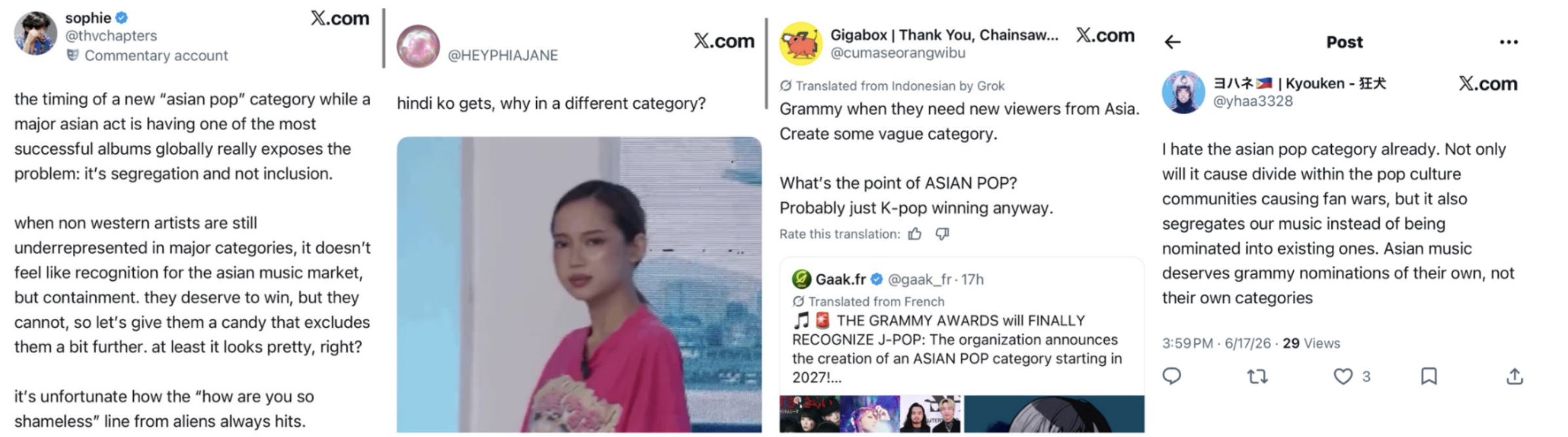
Others questioned whether the category could unintentionally place Asian artists in a separate lane rather than integrating them further into the GRAMMYs’ existing genre categories. Some fans compared the move to Latin music’s presence across multiple GRAMMY categories, arguing that Asia’s vast musical landscape deserves broader recognition as well.
At the same time, supporters viewed the new award as an important first step. They noted that Asian artists have long been underrepresented by major Western awards institutions despite their massive global audiences and growing cultural impact.
Whether the category is seen as overdue recognition or a form of segregation, the debate has already expanded beyond who might win. Instead, fans are asking a larger question: what does meaningful inclusion for Asian artists actually look like on music’s biggest stage?