
There are phrases you hear once and immediately know the exact facial expression, video clip, or person they came from. The internet has a funny way of turning fleeting Filipino moments into permanent pieces of vocabulary and eventually, the original context almost becomes optional.
That is the power of the Filipino vocal stim: phrases that are so oddly specific, so inherently funny, or so deeply embedded in internet culture that they become impossible not to repeat.
ZEEN Picks some of the latest ones that have made their way into our collective vocabulary.

The “Karylle Method”
Before “media training final boss” became a phrase we could throw around, Karylle had already perfected the art of saying absolutely nothing while somehow saying everything. Years ago, during a guest appearance on a show hosted by Boy Abunda, Karylle was asked a particularly tricky question involving Marian Rivera. Instead of giving Tito Boy the answer he was looking for, she simply smiled.

That smile eventually became its own language and the internet later christened the tactic “Karylle Method” when the question is too messy to answer, simply smile, say nothing, and let everyone else figure it out. Basically: no comment, but make it Karylle.
Vice Ganda’s “Ay, Nakatulog”
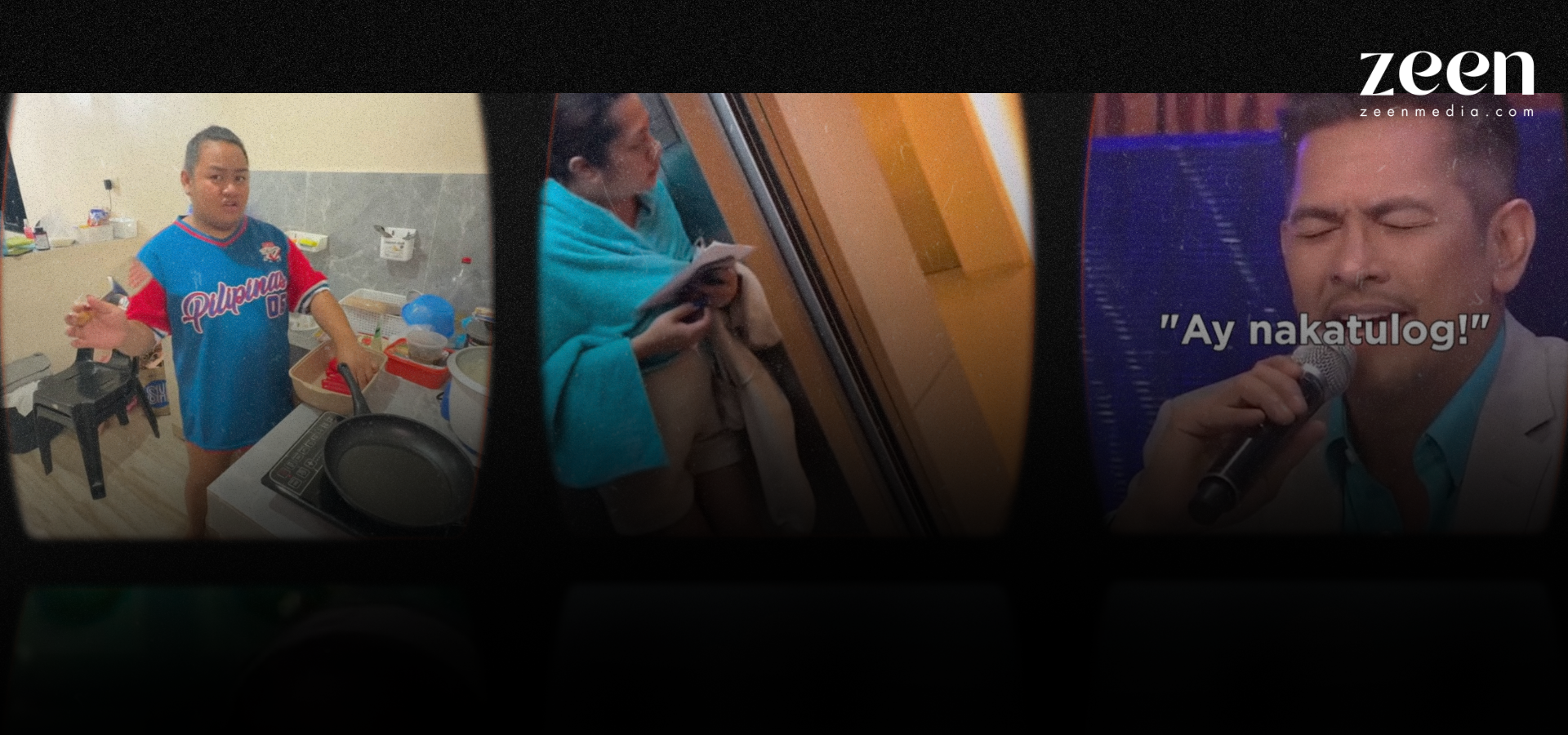
During It’s Showtime’s “Tawag ng Tanghalan,” then-juror Gary Valenciano was giving his comments to a contestant when he suddenly paused mid-thought. The dead air lingered just long enough for Vice Ganda to turn it into a joke with the now-familiar, “Ay, nakatulog.”


The phrase eventually escaped the Tawag ng Tanghalan stage and became a go-to reaction for any moment when someone zones out, takes too long to answer, or appears to have temporarily left the conversation.
The phrase has since been documented among the newer Filipino slang and internet expressions circulating online, where its meaning has expanded into a general-purpose reaction for someone seemingly zoning out.
“Sino Nag-Ano-Ano D’yan?!”
Content creator Abby Salle has long been one of the internet’s favorite unofficial primary sources for material that makes absolutely no sense until it becomes funny. One of her resurfaced clips gave the internet another phrase to keep in its back pocket: “Sino nag-aano-ano d’yan?!”

“Avisala”
Filipinos have been speaking Enchan for years. Apparently, we’re ready to export it. “Avisala,” the iconic greeting from Encantadia, has recently found another life online after a video from Team Lisa had one of its members answer a request for a Chinese word with the unmistakably Filipino fantasy term.
The joke works because “Avisala” sounds convincing enough to pass for a word you might hear in another language if you weren’t already familiar with Encantadia. But for Filipino internet users, the word carries an entire fantasy universe with it.

Originally used within Encantadia as part of the show’s fictional language, “Avisala” has long outlived its original episodes. The word has remained part of the franchise’s vocabulary and has continued appearing in official Encantadia content years later. GMA itself has used “Avisala” in Sang’gre material and promotional content, while fans have continued treating it as one of the franchise’s most recognizable expressions.
So when somebody asks for a random word in another language, why say ni hao when you can say Avisala? That is the beauty of a Filipino vocal stim. It doesn’t have to make sense anymore. And once a phrase becomes part of the vocabulary, good luck getting rid of it. Avisala, mga vocal stimmers.