

In an era of cinematic production increasingly defined by corporate synergy and the administrative bloat of the multi-platform franchise, James Watkins’ Clayface (2026) arrives as a bracingly insular anomaly.
The R-rated psychological horror film penned by Mike Flanagan and Hossein Amini does something entirely antithetical to contemporary studio mandate, it treats the intellectual property of Gotham City not as a commercial blueprint, but as a gothic backdrop.
For the uninitiated, the narrative logline is deceptively straightforward: Matt Hagen (portrayed by Tom Rhys Harries), a rising theatrical actor, is brutally disfigured by a mob boss (David Dencik). Desperate to salvage his career, he undergoes an experimental, highly volatile nanocell therapy administered by Dr. Caitlyn Corr (played by Naomi Ackie), inadvertently trading his biological stability for a horrific, malleable anatomy.
Yet, to evaluate Clayface merely as a conventional monster movie is to miss its most compelling psychological architecture. Beneath the film’s stomach-churning practical effects lies a clinical, devastatingly human observation of what happens when a supernova falls from grace.
Hagen, played with a desperate, grandiloquent theatricality by Harries, exudes the haunting aura of an entity whose primary fuel source has been abruptly extinguished. For the narcissist and the performer, that fuel is the public gaze and the toxic necessity of external validation.
When his visage is stolen, Hagen’s psychological core destabilizes. His subsequent submission to an unpredictable medical trial is not a symptom of simple vanity, but the frantic panic of a dying star attempting to maintain its own gravity.
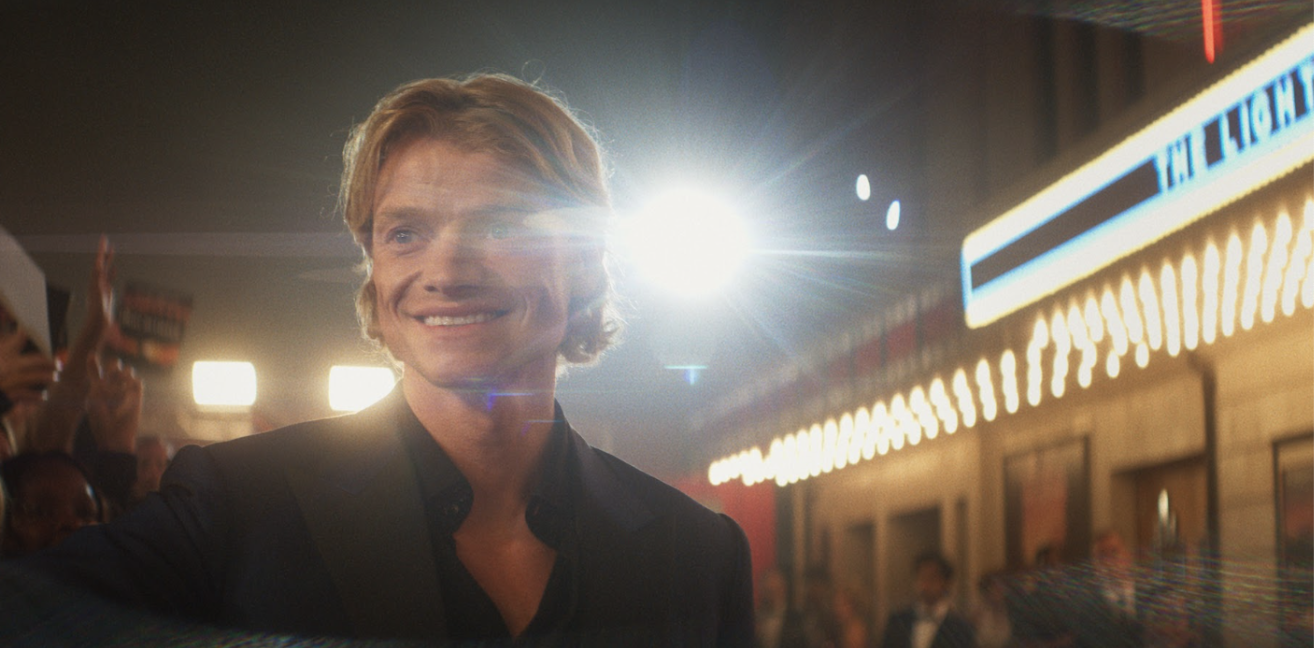
The film finds its thematic anchor in this radical, destructive codependency. Hagen possesses no true interiority. He exists entirely through how he is reflected in others. When the exceeding dose of nanocells grant him the terrifying ability to morph his flesh, the metaphor turns literal and predatory that he must consume and mimic the identities of those around him because his own center has collapsed into a black hole.
The film demands serious aesthetic consideration and Watkins eschews the frictionless, weightless CGI of modern blockbusters for grueling, tactile practical makeup that makes the decay of Hagen’s flesh feel agonizingly physical. When the body horror turns hostile, the violence carries an authentic cinematic weight. It mirrors the catastrophic debris of a cosmic collapse.

While the film’s final act occasionally defaults to conventional revenge-thriller rhythms, it remains a triumph of independent genre filmmaking. By refusing to burden the audience with franchise homework or mandatory cinematic universe world-building, Clayface succeeds as an isolated, poetic tragedy. It is a grueling character piece disguised as a comic villain origin, a beautifully grotesque anatomy of a star burning out in real time.