


With the 2028 Philippine National and Local Elections officially on the horizon, it is time to make sure your voice is not just heard on the timeline, but counted at the ballot box.
According to the Commission on Elections (COMELEC), voter registration is officially open from November 10, 2026, to July 30, 2027. Whether you are a first-time voter finally hitting that 18-year-old milestone, transferring precincts, or reactivating your record, the process is straightforward once you know the drill.
Before heading out, make sure you meet the basic eligibility rules. You must be a Filipino citizen and at least 18 years old on or before Election Day on May 8, 2028, which means anyone born on or before May 8, 2010, can already apply. You also need to have lived in the Philippines for at least one year, stayed in your intended city or municipality for at least six months before the election, and have no legal disqualifications.
You have plenty of time before the July 30, 2027 deadline, so you do not need to wait until the last-minute rush. COMELEC offices and registration sites operate from Tuesday to Friday, between 8:00 AM and 6:00 PM. They are also open on Saturdays and scheduled holidays from 8:00 AM to 5:00 PM, giving students and young professionals flexible weekend options.
Aside from visiting your local Office of the Election Officer (OEO), you can drop by designated satellite registration pop-ups in malls and schools nationwide. COMELEC also runs its Register Anywhere Program (RAP) and Special RAP booths in high-traffic hubs like select airports and hospitals.
Showing up prepared will save you from a wasted trip, so be sure to bring at least one valid government-issued ID along with a photocopy. Accepted IDs include your National ID (either the physical PhilSys card or the digital eGovPH version), Passport, Driver’s License, Postal ID, UMID, PRC or IBP ID, NBI Clearance, PWD or Senior Citizen ID, NCIP Certificate, and a valid Student ID which is especially helpful for first-time youth voters.
Just as important is knowing what to leave at home. COMELEC does not accept Barangay Clearances, Cedulas, PNP Clearances, or Company IDs as primary proof of identity. If you are applying for a transfer of residence or a change of name, make sure to bring supporting documents like a recent utility bill or a marriage contract.
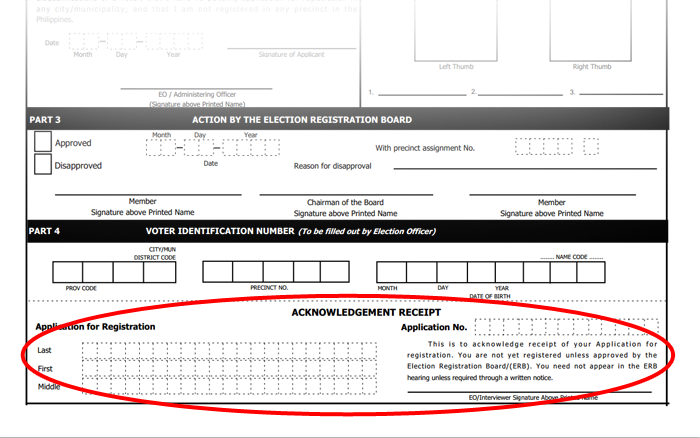
Once you arrive at your chosen venue, the actual registration moves in five quick steps. First, line up and present your valid ID to the officer on duty for initial verification. Second, fill out the CEF-1 2026 Revised B Form, which you can either grab on-site or download and print ahead of time from the official COMELEC website.
After completing the form, hand it over along with your original ID and photocopy so staff can encode your details. Fourth, step up for biometrics capture, where they will take your photo and record your fingerprints and digital signature. Finally, claim your acknowledgment receipt before heading out, as this serves as official proof that your application is in the system.
With registration running until July 2027, grabbing a friend, bringing your valid ID, and knocking this out early is one of the easiest ways to invest in your future.


