Some nightmares don’t come from monsters. They come from places you’ve seen before and places you know you shouldn’t be in.
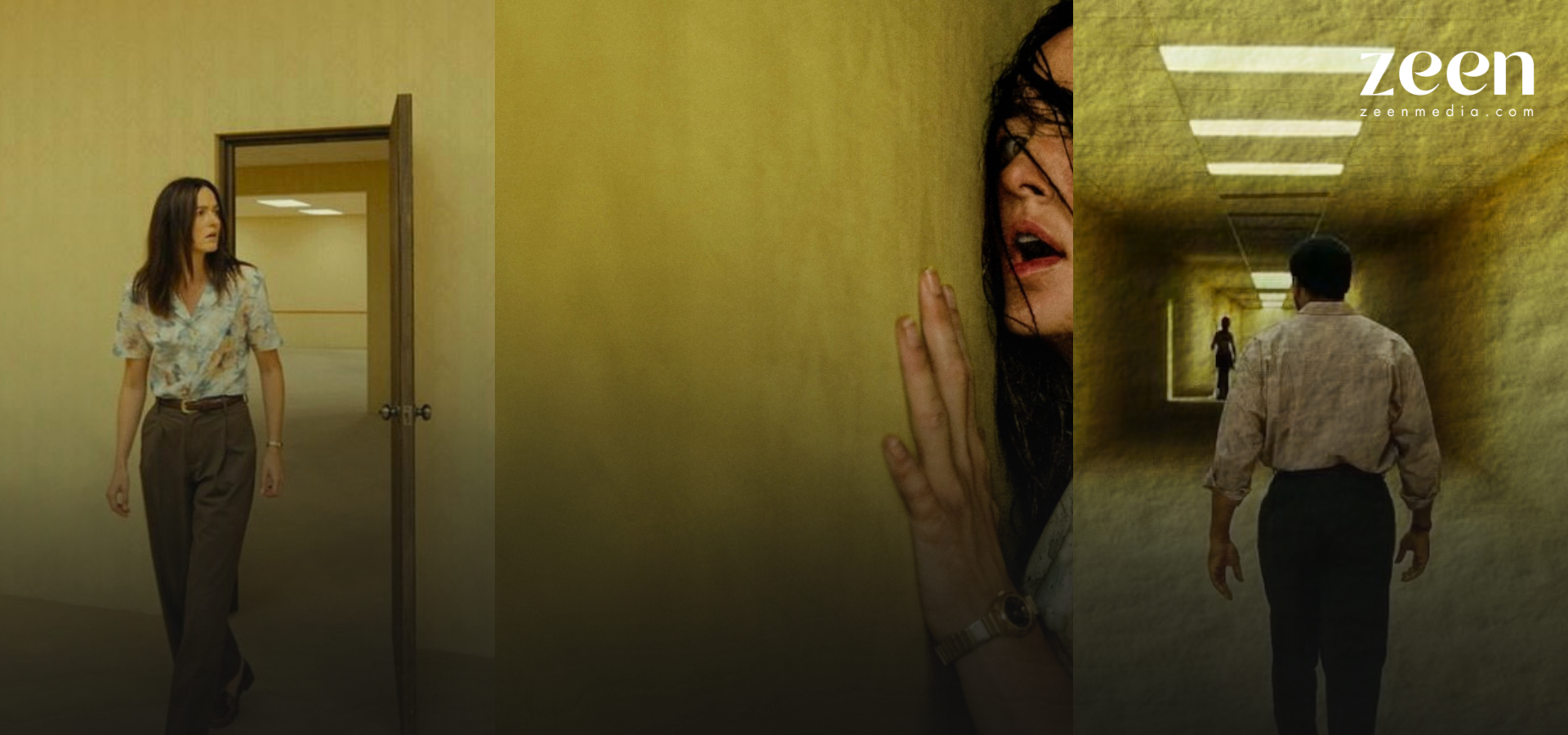
A24 and Creazion Studios’ Backrooms follows Clark (Chiwetel Ejiofor), a furniture store owner who mysteriously vanishes after discovering a strange doorway connected to another dimension. When he becomes trapped within the endless maze of liminal spaces known as the Backrooms, his therapist, Dr. Mary Kline (Renate Reinsve), embarks on a search to bring him home. As she ventures deeper into the Backrooms, the line between reality and nightmare begins to blur, forcing her to confront the unsettling mysteries hidden within it.
What makes Backrooms particularly fascinating is that it isn’t simply a horror movie, it adapts one of the internet’s most enduring pieces of modern internet folklore. Originating from a viral online image and years of community-built mythology, the Backrooms have evolved into a sprawling universe of liminal spaces, strange entities, and endless theories.

I remember falling too deep into a hidden corner of the internet and stumbling upon something disturbing that felt like you were never meant to find it. Scrolling at 3 a.m. through 4chan and Reddit, I would come across photos of abandoned rooms, empty buildings, and eerie indoor playgrounds and pools with no windows.
These images create a narrative in your head that makes you question: Who was living here? What were they doing? Why does this exist? That’s why we’re so curious about what entities might live there and what their story is.
There have always been countless conspiracy theories surrounding these spaces, and Backrooms pulls you directly into that experience. These photos spark curiosity, but Backrooms is a reminder that curiosity quite literally kills the cat.
The film doesn’t spend too much time explaining every detail of the lore. Instead, it immerses viewers directly into it, recreating the same feeling of curiosity and dread that made the phenomenon so compelling online.
The deeper the film goes, the more it begins to feel like a corrupted childhood memory or a VHS tape you were never supposed to find. Its found-footage presentation places you directly inside the maze, creating a constant sense of unease as you wander through environments that feel both unfamiliar and strangely recognizable.

What makes the horror effective is its sense of familiarity. The film pulls from locations that feel lifted straight from memory: hospital hallways, empty school corridors, silent lobbies, abandoned playgrounds, and forgotten rooms. Even if you’ve never stepped into those exact spaces, they feel like places you’ve seen before, making every corner unsettling.
I found that the narrative gradually became warped and difficult to predict. Though reality unravels, creating a viewing experience that feels disorienting, overwhelming, and psychologically exhausting in the best possible way.
After watching Backrooms, I couldn’t look at ordinary places in the same way anymore. A dim hallway, an empty bathroom, a silent room at night, feel just a little more unsettling than before.
In many ways, Backrooms succeeds because it understands a simple truth: sometimes the scariest thing isn’t the unknown. It’s something familiar that has been distorted just enough to feel wrong.