

Somewhere in Maki’s music, there might be a color he never meant to leave behind, a detail he forgot to notice, or a story his listeners have already begun to piece together.
Ralph William Datoon, professionally known as Maki, has always loved the little things hidden in bigger stories. Growing up, he looked for Hidden Mickeys and immersed himself in anime and manga. He brings that same curiosity to his own work, though sometimes his fans spot things before he does.
“Minsan nga ako mas nagbabasa na ako ng theories ng fans rather than my own story,” he tells ZEEN. Throughout the years of putting out his art, Maki has become tightly knitted with his fans (collectively called Zushis) because of the world around his works. He places something into the world, and his listeners send it back to him with new meanings attached. They somehow connect the dots, and build theories of their own. What begins as a song becomes a world people can wander through, finding things Maki himself might have missed.

Still, he and his team have had to learn when to stop looking for meaning in every corner. Maki recalled conversations about being “too conceptual” and the need to return to the point of an idea before taking it further. Some things can be planned; others are better left to unfold naturally.
Navigating Life’s Rhetorics
When his EP Tanong arrived in 2023, Maki was writing from a place of vulnerability, trying to make sense of what he felt. A year after KOLORCOASTER was released, those questions have not necessarily disappeared but simply found new ways to sit with them.
Asked what KOLORCOASTER might answer if Tanong were him asking questions, Maki pointed to “Siguro…?” a song about uncertainty and the possibilities that come with it. Through KOLORCOASTER, Maki found some assurance in not having to figure everything out at once. As he put it, “We don’t need to ask so many questions. You just need to do what you want to do.”
The album conveys that feeling in its many colors. It looks playful, almost childlike, but holds the perspective of someone who has already lived through difficult seasons and is still finding his way through them. Maki described it as having the face of a child and the depth of a much older person who has experienced all the colors of life.
The colors are not always bright. Growing up, Maki was criticized and mocked for being different, and that feeling has followed him into parts of the music industry. But somewhere along the way, he began to look at differences less as something to explain away and more as a part of himself.
“Being weird and being different is a customization of who you are,” he said. Maki has come to terms that he does not have to become less himself to make sense to other people. He can take the things that once made him feel out of place and build something with them.
Every version of himself gets a song
Maki sees each era as a record of who he was when he made it. His music changes because he does, and a new version of himself does not have to erase the one who came before.
“If you’re not gonna do it the best way you can, why do it? Don’t do it at all if you’re not gonna be at your best,” he tells ZEEN.
Even his songs seem to carry different personalities. If they were siblings, “Kailan?” would be the eldest: tired, responsible, always initiating and looking after everyone else. “Dilaw” would be the bunso, warm and fresh, the one everybody loves. They might even fight over clothes.
Then there is “Para sa Buwan,” which Maki described as the only song he had written for a particular person that felt especially sweet. He hopes to write more songs like it, although he joked about the curse of dedicating it to someone and not ending up together.
Taken together, the songs hold different versions of longing, tenderness, uncertainty, and joy. They do not have to sound alike to belong to the same body of work. Like the experiences that shape them, each gets to be what it is.
A life beyond “Maki”
For someone who can spend 10 hours working without noticing the time, Maki knows he cannot keep pouring himself into music without leaving room for anything else.
He still tries to see his high school friends, make time for travel, and take a few days off when he needs to rest. He wants to keep the things that have always made him happy while making space for new ones.
“I don’t wanna change kung paano ako sumasaya, pero I can add kung paano ako mas sasaya,” he shares.
There are other worlds he wants to explore, too. He is curious about fashion and hopes to attend more fashion shows without losing his own sense of style. He wants to learn about business, with interests that could lead him toward food, fashion, or the little things he likes collecting. He knows there is still plenty he has yet to learn.
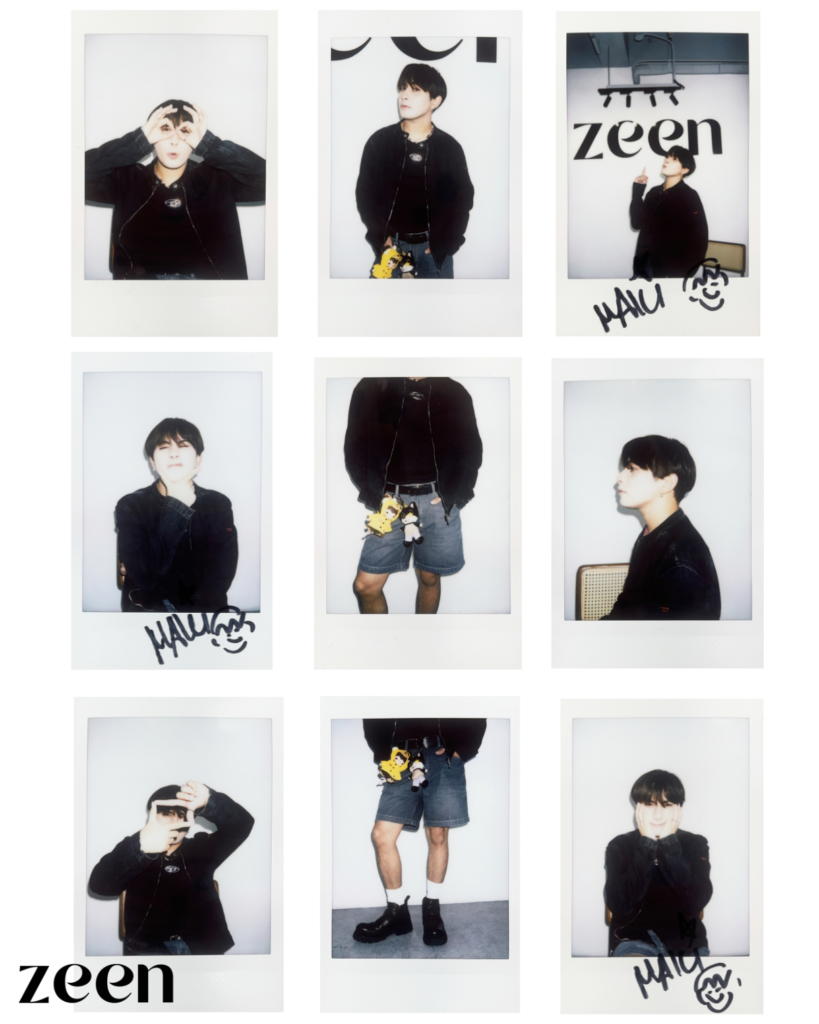
He is still Ralph, a person with a life to live outside the work. Maki is the artist who takes pieces of that life and turns them into music. The two are not separate stories so much as different ways of moving through the same world.
Nothing left to prove
Maki remembers 2022 as the worst year of his life. In 2023, “Saan?” gave him a sense of validation, and the years that followed brought him to stages and audiences he had once struggled to imagine. He has seen people show up for his music, including in an arena, and has had to take in what it means to have his work reach so many people.
For a long time, he felt he had something to prove. He wanted to show people that the things they misunderstood about him were worth taking seriously. But writing songs helped him arrive at a different understanding of why he creates in the first place.
“I realized na, when I was writing songs, I’m not trying to prove anything,
I just love doing it.”
That feeling has stayed with him through award shows, criticism, and comments that his music is too childish or too conceptual. He no longer wants every response to become an argument. He would rather make the song, live his life, and decide what to do with whatever comes his way.

“I don’t need to prove anything to other people. I just need to do what I want to do. I want to inspire, and I want to write a song. And I want to live my life, and that’s it.”
There will be more to figure out. There will be new sounds, new experiences, and probably more details for fans to notice before he does. Maki is still curious about what he can make, and Ralph still has a life waiting beyond the studio doors.
For now, he does not need to know what every color will become. He can let himself live a little, see what the days bring, and make something out of it when he is ready.
